
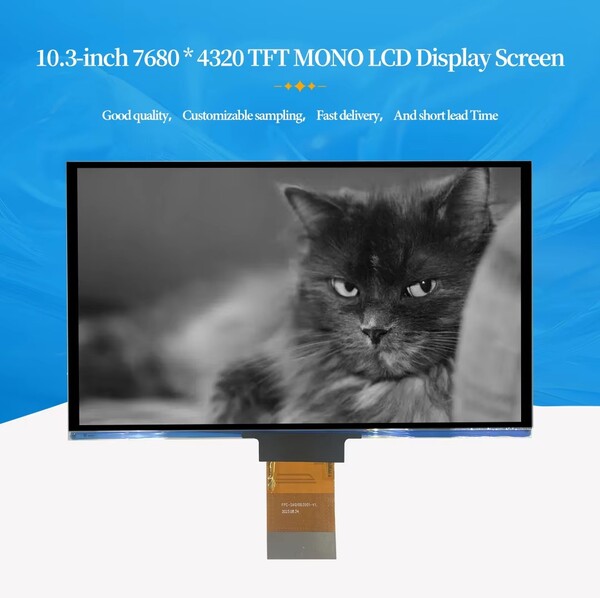
Hardware engineers frequently evaluate whether a mono LCD display outperforms color panels in low-power systems. Furthermore, specialized industrial equipment demands strict lead-free compliance (RoHS) and long service life. Therefore, choosing a high-transmittance monochrome panel is vital. Consequently, monochrome displays offer superior energy efficiency, UV light pass-through, and thermal durability.
Severe Operating Failures with Color Screens in Industrial Applications
Engineers face significant operational degradation when using traditional RGB color panels in UV-heavy systems. First, color sub-pixel filters absorb over 90 percent of incoming light energy. As a result, light source power must increase dramatically to compensate. Consequently, thermal buildup degrades battery life and damages delicate liquid crystal materials prematurely.
Second, conventional RGB screens exhibit slow optical exposure response times under high-intensity illumination. Furthermore, low light transmission causes sluggish resin curing cycles in additive manufacturing setups. Consequently, industrial operators suffer long production delays and soft edge boundaries. Therefore, standard color panels fail during high-precision industrial workflows.
Third, multi-layer color display assemblies experience severe thermal degradation under continuous UV exposure. Specifically, organic color filters degrade quickly, causing uneven brightness across active screen areas. Moreover, high operating temperatures reduce display lifetime to a few hundred hours. Thus, demanding industrial devices require dedicated monochrome screen architectures.
Technical Innovations in High-Transmittance 8K Monochrome Screens
Ultra-High Precision 8K Resolution Architecture
Our 10.3-inch monochrome screen features an extraordinary 7680×4320 ultra-high-definition 8K resolution layout. Furthermore, pixel-perfect detail rendering delivers crisp edges for dental models and jewelry molds. Therefore, micro-scale features print with uncompromising edge crispness every time. Consequently, industrial prototypes achieve flawless surface finishing quality effortlessly.
Optimized 5.5% UV Light Transmittance
The 8K mono display features an optimized 5.5% light transmittance rate. Moreover, removing color filter layers allows direct UV ray pass-through without absorption losses. As a result, photopolymer resin layers cure significantly faster per exposure step. Consequently, overall energy consumption drops dramatically while extending display operational life.
High-Speed MIPI Interface with 50-Pin Connector
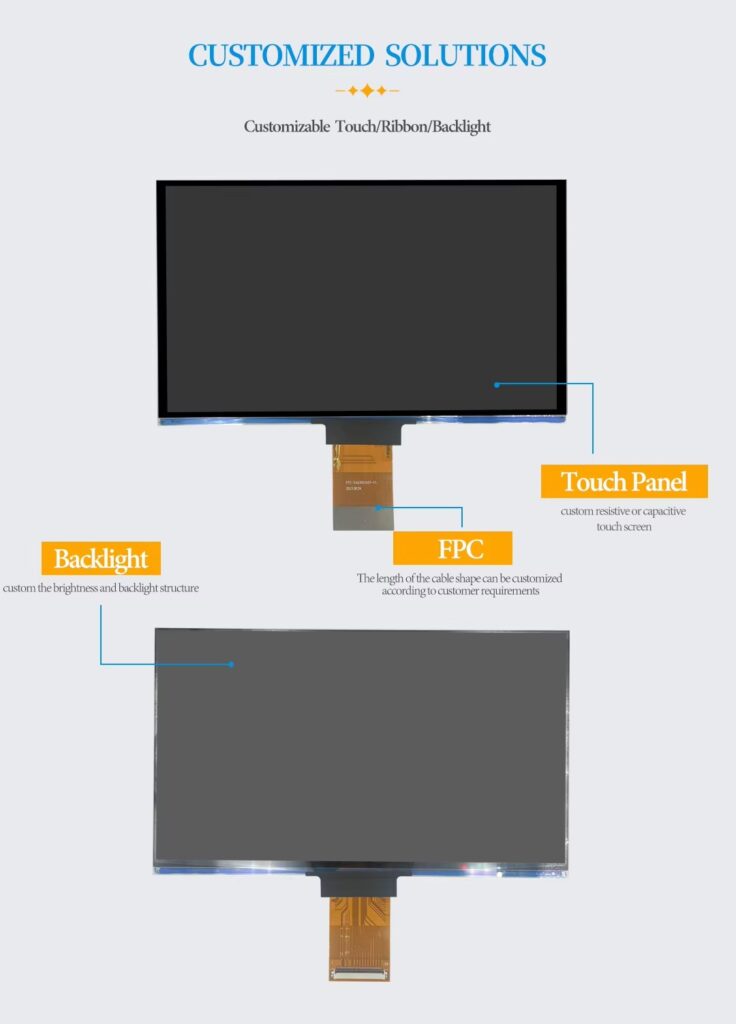
Model DXQ10D301 incorporates a high-speed MIPI interface through a reliable 50-pin connector. Furthermore, fast signal transmission ensures instant image frame loading with ultra-low latency. Consequently, controller boards stream complex slice data smoothly without system bottlenecking. Therefore, high-volume production setups achieve maximum throughput efficiency continuously.
Durable Glass Construction and Wide Operating Temperatures
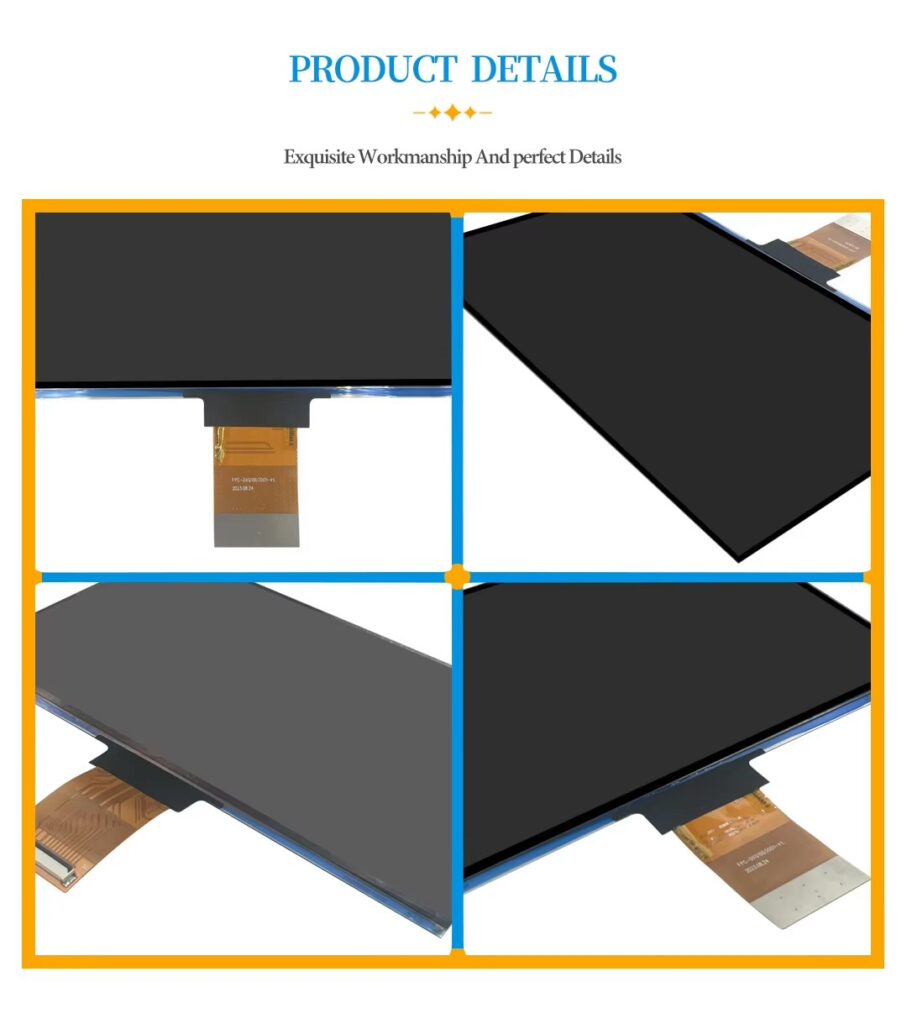
Engineered with rugged glass, this monochrome panel operates from -20°C up to +70°C ambient temperatures. Furthermore, it resists storage temperatures from -40°C to +80°C without alignment loss. Consequently, the display delivers stable optical contrast during intensive continuous printing cycles. Therefore, system integrators gain dependable performance in tough factory environments.
To examine our broad portfolio of industrial displays, check our Product Category Catalog now.
Key Technical Specifications and Certification Breakdown
Deploying certified display hardware ensures regulatory compliance and long-term operating durability. Below are the comprehensive specifications for our 10.3-inch photopolymer 3D printed screen module.
| Technical Parameter | Specification Value | Industry Compliance / Certification |
| Display Size & Type | 10.3 Inches (MONO LCD Display) | RoHS Lead-Free Compliance |
| Native Resolution | 7680 × 4320 (8K Ultra-High Precision) | CE / FCC Certified Standard |
| Model Code & Connector | DXQ10D301 (50 Pins Connector) | ISO 9001 Quality System Standard |
| Light Transmittance | 5.5% UV Transmission Rate | REACH Environmental Standard |
| Interface & Viewing Angle | MIPI Interface (IPS-Level Full View) | ESD Protection Standard (IEC 61000-4-2) |
| Active Area (AA) | 228.096 × 128.304 mm | Industrial Grade Durability |
| Outline Dimensions (OD) | 232.096 × 137.402 × 1.24 mm | Extended Thermal Resistance Range |
| Contrast Ratio | 300:1 Dynamic Contrast | Photopolymer Print Standard Compliant |
For complete pinout diagrams and driver initialization scripts, visit our Technical Guide Resource Center today.
Industry Application Scenarios and Value Delivery
Monochrome 8K displays deliver immense mechanical value across demanding additive manufacturing sectors. Specifically, dental laboratories demand extreme dimensional accuracy for clear aligners and surgical guides. Furthermore, 7680×4320 resolution eliminates visible stair-stepping artifacts on curved tooth surfaces. Consequently, dental technicians produce flawless medical-grade appliances effortlessly.
Moreover, castable jewelry creation benefits hugely from high-contrast monochrome panels. Specifically, delicate ring geometries require sharp vertical layer definition and clean internal cavities. Furthermore, rapid exposure times prevent over-curing and resin bleeding inside fine details. Therefore, jewelers achieve high casting success rates with minimal manual polishing work.
In addition, industrial engineering workshops require rapid prototyping for castable molds and miniatures. Furthermore, low-power monochrome screens run cool during continuous multi-day printing runs. Consequently, print hardware failures drop while daily production output increases substantially. Thus, upgrading to 8K mono screens delivers outstanding return on investment for DIY and OEM setups.
Frequently Asked Questions (FAQs)
Q1: Why do monochrome LCD screens last significantly longer than color screens in UV printers?
Monochrome screens lack organic color filter layers that degrade quickly under intense UV light. Furthermore, higher light transmission requires less backlight power, reducing internal heat buildup dramatically. Consequently, monochrome panels operate reliably for several thousand hours under continuous UV exposure.
Q2: How does a 5.5% light transmittance rate speed up exposure times?
Standard color LCDs transmit less than 1% to 2% of UV light due to sub-pixel filtering. In contrast, 5.5% transmittance allows significantly more UV energy to reach the resin vat directly. Consequently, layer curing times drop from 6-8 seconds down to 1.5-2 seconds per layer.
Q3: Is model DXQ10D301 compatible with custom or DIY 3D printer modifications?
Yes, model DXQ10D301 utilizes a standard 50-pin MIPI interface used across common 3D printer control boards. Furthermore, its ultra-thin 1.24 mm profile fits seamlessly into standard chassis frames. Consequently, engineers easily integrate this screen into DIY modifications or OEM printer designs.
Q4: What are the sample and mass production lead times for model DXQ10D301?
Sample orders require a 15-day lead time for testing and evaluation. Furthermore, mass production lead time spans 25 to 30 days for standard order volumes. Moreover, the minimum order quantity (MOQ) for mass production is set at 1,000 units.




Add comment