
Choosing a reliable custom AMOLED display manufacturer helps OEM teams develop compact devices with vivid images and responsive interfaces. Moreover, AMOLED technology supports deep blacks, high contrast, and rich color reproduction. These features suit portable electronics, embedded systems, and interactive equipment.
However, successful customization requires more than selecting a display size. Engineers must also consider interface compatibility, touch integration, mechanical dimensions, and operating conditions.
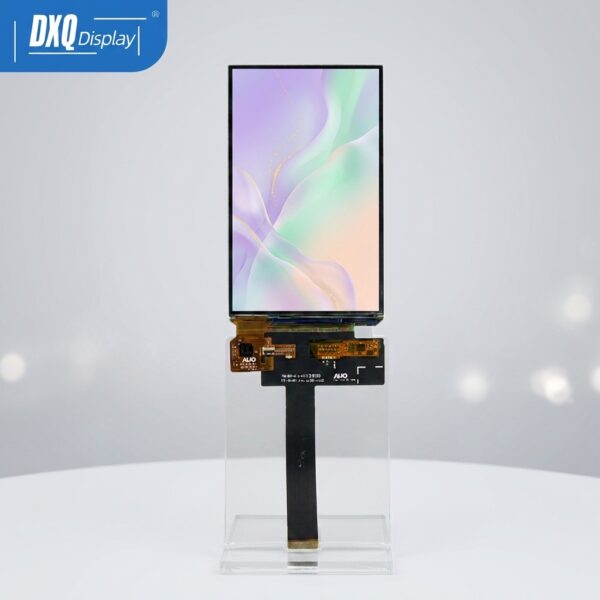
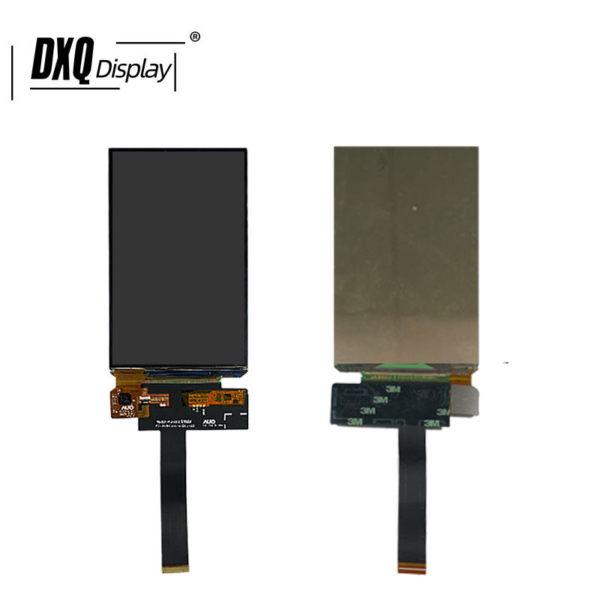
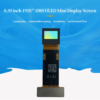
The AUO H497TLB01.4 AMOLED module offers a practical starting point for these projects. It combines a compact display format with integrated Oncell touch functionality. Therefore, developers can evaluate its suitability for handheld devices and specialized equipment.
How Can AMOLED Displays Improve Handheld Device Design?
Handheld products often balance screen readability, compact dimensions, and comfortable operation. Meanwhile, limited internal space makes component integration an important design consideration.
A compact AMOLED module can support handheld gaming consoles, portable terminals, and personal electronic devices. Furthermore, its high contrast helps distinguish interface elements and detailed graphics.
Match Display Characteristics to Product Requirements
The AUO H497TLB01.4 provides a resolution of 720 × 1280 pixels. Its nominal contrast ratio reaches 10,000:1, supporting clear separation between bright and dark image areas.
Additionally, its 350 candelas per square metre luminance suits many indoor applications. However, sunlight-readable equipment may require higher brightness or additional optical optimization.
For OEM developers, the display’s thin profile also supports compact product layouts. Its specified thickness is 1.00 millimetre, excluding any additional assembly components.
Therefore, engineers should evaluate the complete mechanical stack before finalizing the enclosure.
Can a Custom AMOLED Display Manufacturer Support Drone Applications?
Drone controllers and portable ground stations require readable interfaces. Operators may need to monitor telemetry, camera feeds, navigation information, and battery status.
Consequently, display selection should reflect both interface design and operating conditions. A suitable screen can help present essential information within a limited viewing area.
Optimize the Display for Portable Control Systems
The module uses a MIPI interface and an RM69052 driver IC. Therefore, engineering teams should verify compatibility with their processor, display controller, and firmware.
Its 720 × 1280-pixel resolution can accommodate maps, instrument panels, and compact control menus. Meanwhile, its wide viewing characteristics support viewing from different angles.
Nevertheless, drone applications introduce additional considerations. Engineers should assess vibration, temperature changes, power requirements, and visibility during outdoor operation.
A custom AMOLED display manufacturer should clarify available integration options. These may include interface adaptation, flexible printed circuit customization, and touch integration.
Explore our AMOLED Display Product Category for modules suited to portable electronics and embedded devices.
How Can AMOLED Modules Improve Smart Home and Embedded Interfaces?
Smart home controllers often combine compact hardware with visually intuitive interfaces. For example, users may control lighting, temperature, access systems, and connected appliances.
Similarly, industrial human-machine interfaces may display operating states and navigation menus. Therefore, screen clarity and consistent touch response remain important selection criteria.
Integrate Touch and Display Functions Efficiently
The featured module incorporates Oncell touch functionality. This arrangement integrates touch sensing into the display structure, subject to the specific module design.
Additionally, the manufacturer lists a 39-pin connection and compact external dimensions. These details help engineers evaluate electrical connections and installation space.
However, developers should confirm pin assignments and touch-controller compatibility before circuit design. They should also assess electromagnetic interference and grounding requirements.
For embedded products, early sample testing can reveal integration issues. Consequently, teams can refine mechanical layouts and interface software before committing to larger production runs.
Read our Technical Guide for practical display integration and interface selection considerations.
What Customization Options Matter Most in OEM AMOLED Projects?
OEM requirements vary across gaming devices, portable instruments, and control terminals. Therefore, suppliers should distinguish standard specifications from optional engineering services.
For example, some projects prioritize touch integration. Others need customized cover glass, optical bonding, or flexible printed circuit arrangements.
Define Technical Requirements Before Prototyping
The following table summarizes the module’s key specifications. It also identifies important items that OEM teams should confirm.
| Parameter | H497TLB01.4 specification | OEM consideration |
|---|---|---|
| Display size | 4.97 inches, marketed as 5 inches | Confirm enclosure compatibility |
| Resolution | 720 × 1280 pixels | Check interface scaling |
| Display technology | AMOLED | Evaluate image requirements |
| Luminance | 350 candelas per square metre | Assess ambient lighting |
| Contrast ratio | 10,000:1 | Review visual performance |
| Display interface | MIPI | Verify host compatibility |
| Driver IC | RM69052 | Confirm software integration |
| Touch function | Oncell | Validate touch implementation |
| Pin count | 39 pins | Check connector assignments |
| Outline dimensions | 65.92 × 118.64 × 1.00 millimetres | Review mechanical drawings |
| Operating temperature | −20 to 70 degrees Celsius | Verify device-level thermal conditions |
| Storage temperature | −30 to 80 degrees Celsius | Confirm storage requirements |
| Certification | Not specified in the supplied information | Request applicable documentation |
The module supports sample orders starting at two pieces. The stated sample lead time is seven days, while mass production typically requires 25–30 days.
However, buyers should confirm lead times against current capacity and order requirements. They should also clarify available customization options before approving samples.
Browse our Custom Display Solutions to evaluate suitable modules for your next OEM project.
How Should Buyers Evaluate a Custom AMOLED Display Manufacturer?
A capable supplier should help align display characteristics with real product requirements. Moreover, clear engineering communication helps coordinate component selection and prototype evaluation.
Before ordering, provide the intended application, mechanical drawings, interface requirements, and estimated production volume. Additionally, specify touch behavior, brightness targets, and operating temperature conditions.
Then, test representative samples within the actual host device. Evaluate image quality, touch response, connection stability, and power consumption under expected workloads.
Finally, review quality procedures and applicable regulatory documentation. The supplied specifications do not identify specific certifications, so buyers should request relevant compliance evidence.
With this preparation, a custom AMOLED display manufacturer can assess project feasibility more accurately. As a result, OEM teams can make informed decisions about customization scope, development schedules, and purchasing costs.
Q&A: Custom AMOLED Display Manufacturer for OEM Projects
Q1: Which devices can use the AUO H497TLB01.4 AMOLED display?
The module suits handheld gaming devices, drone displays, portable instruments, smart home controllers, and embedded interfaces. However, each application requires compatibility checks.
Q2: Does the display support touch functionality?
Yes. The module features Oncell touch functionality. Nevertheless, developers should confirm touch-controller requirements and host-system compatibility.
Q3: Can OEM buyers request customized display configurations?
Potential options include cover glass customization, optical bonding, interface optimization, and flexible printed circuit adjustments. The supplier must confirm each option’s feasibility.
Q4: What should engineers check before integrating this AMOLED module?
Verify the MIPI interface, driver compatibility, 39-pin connection, mechanical dimensions, and operating temperature range. Additionally, test touch performance and power consumption within the intended device.
Q5: How quickly can OEM buyers receive samples?
The stated sample lead time is seven days, with a minimum order quantity starting at two pieces. Mass production typically takes 25–30 days, subject to confirmation.




Add comment