
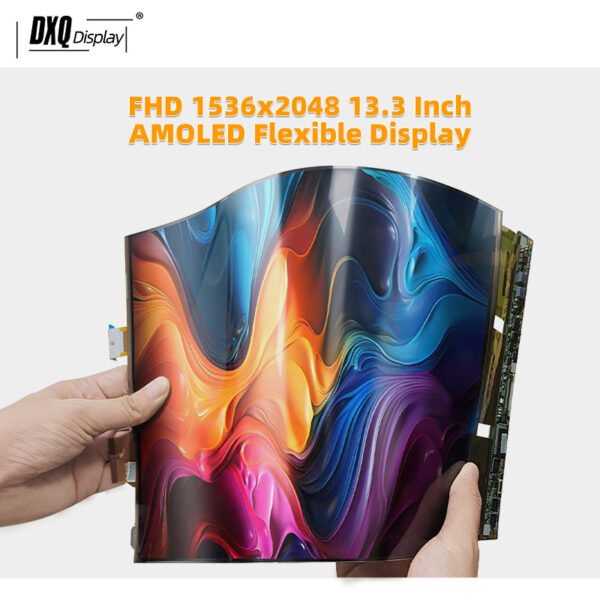
A High Resolution Flexible Display can reshape modern visual experiences.It combines sharp imaging with flexible industrial design.Meanwhile, AMOLED technology delivers strong contrast and rich visuals.
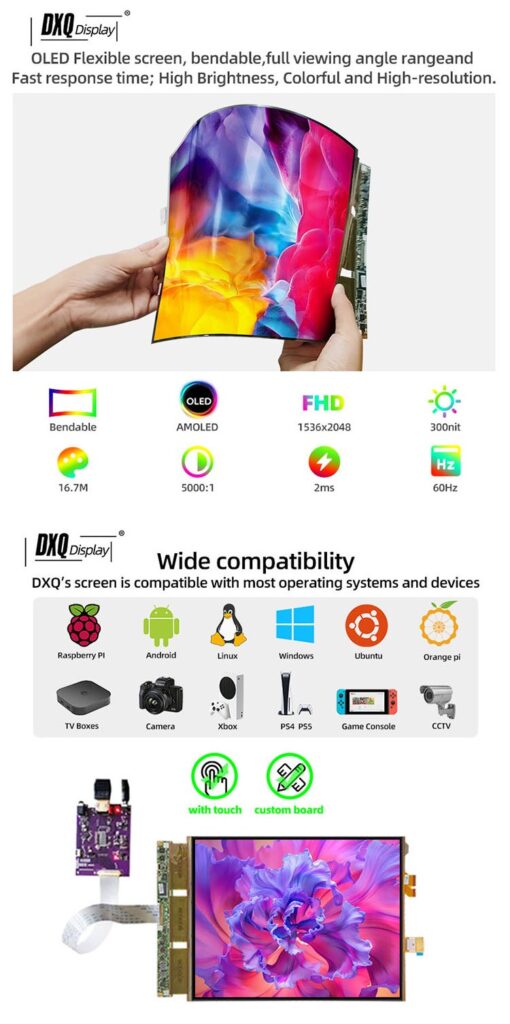
This combination suits many compact smart devices.It also supports curved and foldable product structures.For designers, flexibility creates more structural freedom.The LP133QX1-EPA1 offers a practical example.It uses a 13.3-inch flexible AMOLED panel.Its resolution reaches 1536×2048 pixels.Furthermore, the panel supports an eDP interface.It also provides 300 cd/m² brightness.Its contrast ratio reaches 5000:1.
Therefore, developers can explore various device concepts.These include PCs, curved displays, and smart equipment.The panel also supports customized integration requirements.
Why Do Traditional Displays Limit Flexible Device Design?
Traditional rigid panels create structural limitations.They usually require a fixed flat installation area.Therefore, designers face fewer enclosure options.However, modern devices often require compact structures.They may also require curved or foldable surfaces.Consequently, rigid displays can restrict industrial design.A flexible AMOLED panel offers another approach.Its thin substrate supports curved shaping.It can also support foldable structure concepts.
For example, this 13.3-inch panel supports full-body folding.That feature creates additional design possibilities.However, the final folding radius needs engineering validation.
Developers should evaluate the complete device structure.They should also test mechanical stress during development.This approach helps improve long-term design reliability.For related product options, explore Flexible Display Solutions through the product-category section.
How Can High Resolution Improve Flexible Display Quality?
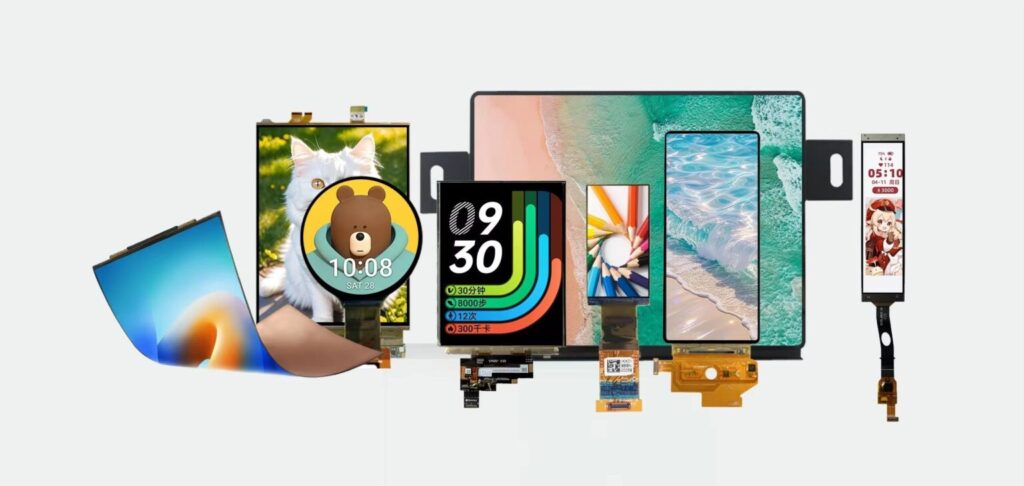
Resolution directly affects image detail.Higher pixel density can produce finer visual information.Therefore, resolution matters for detailed digital interfaces.This panel uses a 1536×2048 resolution.The format provides more than two million pixels.As a result, content can appear more detailed.The 13.3-inch size also supports larger interfaces.Users can view more content within one screen.This benefit suits PCs and smart equipment.
Moreover, AMOLED technology adds another visual advantage.Each pixel can control its own light output.Therefore, dark content can appear visually deeper.The panel provides a 5000:1 contrast ratio.This specification supports strong image separation.It can benefit interfaces with mixed light levels.However, real image quality depends on the system.Source content also affects the final visual result.The display controller also plays an important role.
Why Does Flexible AMOLED Matter for Foldable Devices?
Flexible AMOLED technology supports new form factors.Designers can move beyond traditional flat screens.This flexibility can support curved device concepts.The LP133QX1-EPA1 uses a flexible AMOLED structure.Its substrate supports bending and folding applications.Therefore, designers can explore more compact structures.Its lightweight construction also supports mobile products.A thinner display can simplify product integration.However, system thickness depends on the entire assembly.Furthermore, the panel supports secondary processing.Developers can request cover glass integration.They can also consider AG, AR, and AF coatings.On-Cell capacitive touch further improves integration.It places touch functionality within the display structure.Therefore, designers can reduce separate touch components.Custom FPC pin definitions also support project development.This feature can simplify customized hardware integration.However, engineers should confirm interface requirements first.For technical integration guidance, visit Flexible Display Technical Guide through the technical-guide section.
How Can Flexible Displays Improve Smart Device Design?
Smart devices increasingly need compact interfaces.They also require intuitive and attractive visual surfaces.Therefore, display design affects the whole product experience.A flexible display provides greater structural freedom.It can follow selected curved product surfaces.It can also support foldable enclosure concepts.This advantage applies beyond consumer electronics.Automotive displays can also use flexible structures.Commercial equipment may benefit from similar designs.Industrial equipment can use customized display assemblies.Meanwhile, specialized equipment may require unique layouts.Flexible panels can support these development directions.However, each application has different requirements.Automotive systems require careful environmental validation.Industrial products may need broader temperature testing.This panel operates from 0°C to +50°C.Its storage range reaches -20°C to +60°C.Therefore, developers should match conditions carefully.
What Technical Features Support Immersive AMOLED Visuals?
High Resolution and Large Active Area
The panel measures 13.3 inches diagonally.Its active area measures 202.752 × 270.336 mm.This area provides useful space for rich interfaces.The 1536×2048 resolution supports detailed content.It also creates a high-density visual presentation.Therefore, text and graphical elements can appear refined.
High Contrast AMOLED Performance
The panel provides a 5000:1 contrast ratio.This specification supports strong separation between tones.As a result, visual content can appear more dimensional.AMOLED technology also supports deep dark levels.This feature benefits interfaces using dark backgrounds.It can also enhance multimedia viewing experiences.
Integrated On-Cell Touch
The panel integrates On-Cell capacitive touch.Therefore, developers can create interactive interfaces.This feature suits smart equipment and consumer electronics.The touch layer also supports a cleaner integration concept.However, cover glass selection affects final performance.Touch tuning should match the complete device structure.
Flexible and Foldable Structure
The panel supports bending and folding concepts.Its ultra-light substrate supports flexible product structures.Therefore, designers gain more industrial design freedom.The final folding method still requires validation.Engineers should evaluate stress across the complete assembly.They should also verify hinge and enclosure compatibility.
eDP Interface and 40-Pin Connector
The display uses a standard eDP interface.It connects through a 40-pin connector.Therefore, developers can plan structured hardware integration.The interface supports modern embedded display applications.However, developers should verify signal compatibility first.They should also confirm the required pin definition.
Product Specifications and Development Information
| Parameter | Specification |
|---|---|
| Product Model | LP133QX1-EPA1 |
| Display Size | 13.3 inches |
| Display Type | Flexible AMOLED |
| Resolution | 1536 × 2048 |
| Brightness | 300 cd/m² |
| Contrast Ratio | 5000:1 |
| Interface | eDP |
| Touch Panel | On-Cell Capacitive Touch |
| Connector | 40 Pins |
| Viewing Angle | 85/85/85/85 |
| Driving Frequency | 60Hz |
| Outline Dimensions | 213.8 × 284.8 mm |
| Active Area | 202.752 × 270.336 mm |
| Operating Temperature | 0°C to +50°C |
| Storage Temperature | -20°C to +60°C |
| Folding Structure | Supported |
| Bendable Structure | Supported |
| MOQ | 2 pcs |
| Sample Lead Time | 7 Days |
| Mass Production Lead Time | 25–30 Days |
| Certifications | Not specified in provided data |
Which Applications Can Use a High Resolution Flexible Display?
Consumer Electronics
Consumer electronics demand compact visual solutions.They also need attractive and interactive interfaces.Therefore, flexible AMOLED panels can support innovative designs.Potential products include portable computers.They can also include smart terminals and specialized devices.The 13.3-inch size suits larger portable interfaces.
Automotive Displays
Automotive interiors increasingly use digital interfaces.Flexible panels can support curved dashboard concepts.They can also create more integrated visual surfaces.However, automotive projects require additional validation.Temperature, vibration, and reliability need careful testing.The display specification alone cannot confirm vehicle suitability.
Commercial and Industrial Equipment
Commercial equipment often requires customized interfaces.Industrial systems may also need specialized display structures.Flexible panels can provide additional installation options.The eDP interface supports structured hardware development.Meanwhile, custom FPC definitions can support project requirements.Engineers can therefore optimize the complete display assembly.
Customized Equipment
Some projects require unique display dimensions.Others need special touch or optical treatments.This panel supports several secondary processing options.These include AG, AR, and AF cover glass treatments.On-Cell touch integration is also available.Custom FPC pin definitions can support further integration.
How Should Developers Select a Flexible AMOLED Panel?
First, define the required display dimensions.Next, confirm the target resolution and interface.Then, evaluate brightness and contrast requirements.After that, check mechanical design limitations.Confirm the required bending and folding structure.Also, verify the complete enclosure design.Furthermore, review operating temperature requirements.Check the touch solution and cover glass structure.Then, confirm connector and FPC specifications.Finally, test the panel within the complete device.This process helps identify integration issues early.It also supports smoother mass production planning.
Conclusion
A High Resolution Flexible Display combines visual quality with design flexibility.AMOLED technology supports strong contrast and vivid presentation.Meanwhile, flexible construction enables curved device concepts.The LP133QX1-EPA1 provides a balanced solution.It combines a 13.3-inch format with 1536×2048 resolution.It also provides 5000:1 contrast and 300 cd/m² brightness.Its eDP interface supports structured hardware integration.Its On-Cell touch supports interactive product designs.Furthermore, its flexible structure enables foldable applications.For developers, customization adds further design flexibility.AG, AR, and AF treatments can support optical requirements.Custom FPC definitions can support hardware integration.Most importantly, engineers should validate every application.Mechanical, electrical, optical, and thermal factors all matter.With proper testing, flexible AMOLED can support innovative products.




Add comment