
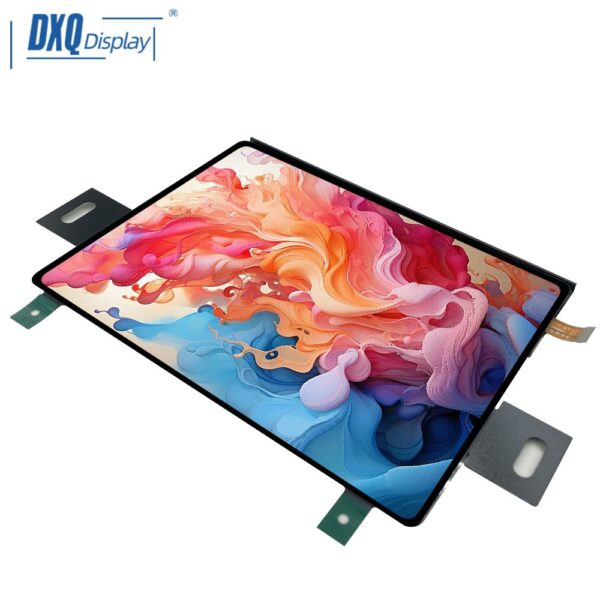
Modern users demand rich visual quality on handheld multimedia devices for portable entertainment today. Furthermore, conventional LCD panels suffer from weak backlight bleeding, causing washed-out contrast during movie viewing. Today, adopting a high-resolution amoled display delivers vibrant color output and deep black levels. Consequently, innovative digital product designers elevate mobile visual experiences while ensuring lead-free compliance across global electronic safety standards.
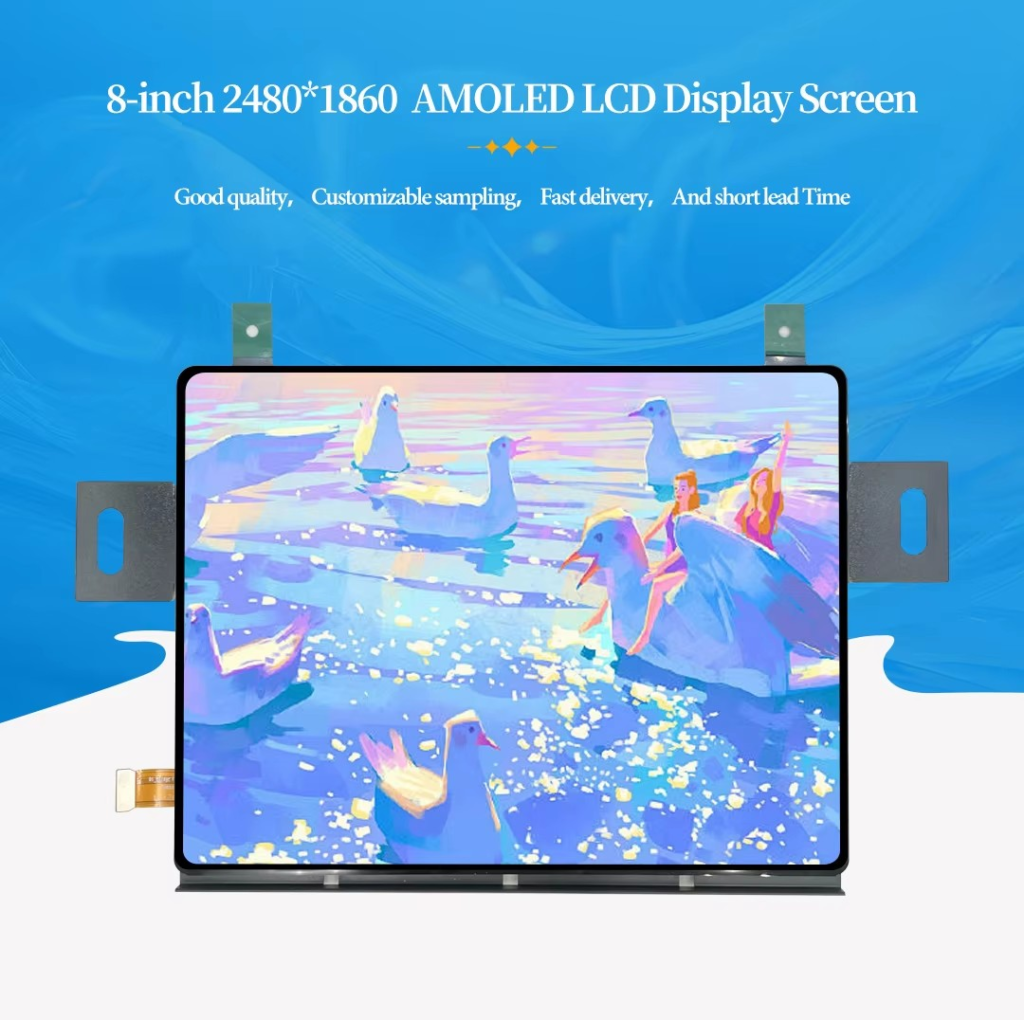
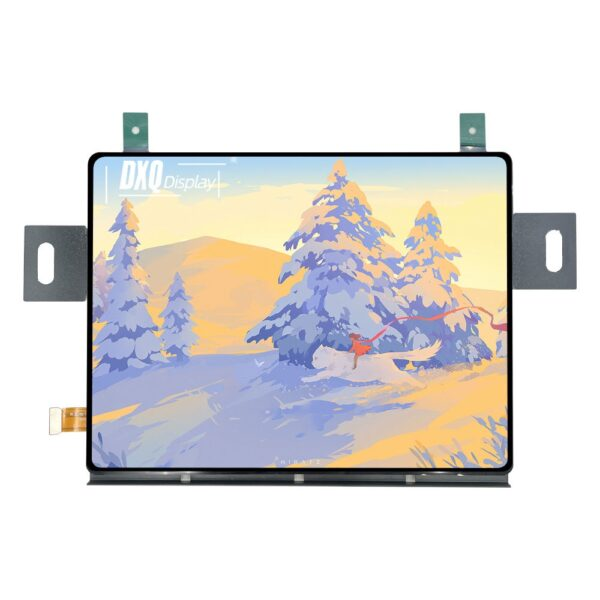
Our 8.0-inch flexible AMOLED screen delivers crisp image details alongside superior power efficiency. Therefore, handheld hardware developers replace bulky legacy LCDs with ultra-thin OLED panels. Specifically, model DXQ8D001 features a high 2480×1860 resolution driven by the RM69380 driver IC. Explore our product-category for specialized AMOLED modules and flexible display panel solutions.
In addition, self-emissive sub-pixels achieve an impressive 600,000:1 ultra-high contrast ratio effortlessly. Consequently, visual applications render vivid HDR video clips without dark scene noise or color shifting. Furthermore, integrated On-Cell touch tech eliminates extra cover glass layers, creating lightweight portable digital products.
Visual Bottlenecks: Resolving 4 Portable Entertainment Issues
Handheld entertainment devices face washed-out colors, severe viewing angle shifts, heavy display assembly thickness, and input lag. Below, we examine four primary mobile display challenges and our technical screen solutions.
Washed-Out Dark Scenes and Low Contrast Ratios
Standard mobile LCD screens rely on constant LED backlights that bleed through dark pixels continuously. Specifically, dark movie scenes look grayish, hiding subtle shadows during high-definition video playback. Therefore, premium multimedia devices require self-emitting light technology for true dark rendering. Consequently, deploying an amoled screen delivers deep blacks and sharp dark scene details.
Example: A user watches a dark sci-fi movie on a handheld gaming console using a traditional LCD screen. Backlight bleeding turns black space backgrounds into dull gray, ruining visual immersion completely. Check our technical-guide for AMOLED driving methods and MIPI interface integration steps.
In contrast, our 8-inch AMOLED screen features a 600,000:1 contrast ratio that turns off black pixels individually. Furthermore, 430 cd/m² brightness ensures vivid picture clarity across dynamic visual media content. Thus, portable entertainment devices reproduce film-grade visual contrast across diverse lighting environments.
Color Shifting and Dim Visuals from Off-Center Angles
Conventional handheld screens shift colors dramatically when viewed from off-center side angles. Specifically, group viewing or hand tilting degrades color saturation, frustrating users sharing videos with friends. Therefore, portable digital products demand wide viewing angles without luminance drop-offs. Consequently, choosing a flexible amoled display maintains color fidelity from extreme side angles.
Example: Two travelers share an 8-inch portable media player during a long train trip. The person sitting off-center sees washed-out colors and severe image distortion on a standard TFT LCD panel. In contrast, our AMOLED display delivers wide 80/80/80/80 viewing angles effortlessly.
Additionally, wide color gamut coverage preserves vivid color saturation across every viewing position. Furthermore, colors remain accurate without gray shifting when tilting handheld smart terminals sideways. As a result, users enjoy consistent visual quality regardless of physical device holding positions.
Excessive Module Thickness and Complex Touch Glass Assembly
Layering separate touch panels over display glass increases overall device thickness and physical assembly weight. Specifically, extra glass bonding steps raise manufacturing defect rates while introducing internal light reflections. Therefore, sleek handheld hardware requires integrated touch screen structures. Consequently, installing a mipi interface 8 inch amoled display streamlines device enclosure designs.
Example: A handheld industrial terminal manufacturer struggles with thick device profiles due to multi-layer glass bonding. Heavy display assemblies increase wrist fatigue during prolonged handheld operation across field shifts. In contrast, our display features integrated On-Cell capacitive touch technology directly.
Moreover, eliminating external touch glass bonding reduces total display module thickness down to just 0.77 mm. Furthermore, direct touch integration delivers rapid touch response for fluid swiping and tapping interactions. Thus, device designers build lightweight, ultra-thin handheld products without sacrificing touch sensitivity.
High Data Transmission Latency and Choppy Frame Output
High-resolution display signals lag when standard display interfaces lack sufficient data bus bandwidth. Specifically, low-bandwidth pin configurations cause visual tearing, disrupting smooth gaming action and HD video streams. However, high-speed MIPI interfaces transmit dense pixel data rapidly across modern processor platforms.
Example: A portable gaming terminal suffers visual stutter when rendering fast action scenes at 2K+ resolution. Slow parallel display buses bottleneck frame rates, causing frustrating input delay during fast gameplay sessions. In contrast, our panel utilizes a high-speed MIPI interface with a 46-pin connector setup.
Additionally, the integrated RM69380 driver IC supports stable 60Hz frame driving frequencies effortlessly. Furthermore, broad interface compatibility ensures smooth integration with main ARM and FPGA control chipsets. Thus, multimedia hardware developers eliminate display latency while maintaining fluid video playback performance.
Technical Solutions: Precision Engineering for Compact Displays
Superior portable display modules merge high pixel density, low power consumption, flexible substrates, and fast touch integration. Furthermore, industrial-grade thermal engineering guarantees reliable operation across varied operating environments.
2K+ High Resolution Engine and RM69380 Driver Architecture
Engineers build this display module using a high-density 2480×1860 pixel layout across an 8.0-inch active area. Specifically, high pixel density eliminates visible graininess, rendering razor-sharp text and graphics clearly. Furthermore, the advanced RM69380 driver IC manages individual OLED sub-pixels with high precision. Consequently, device manufacturers rely on a 2480×1860 high resolution oled panel for crisp visuals.
In addition, slim 165.89 × 126.15 × 0.77 mm outline dimensions fit tight handheld device housings easily. Specifically, wide operating temperatures (-20°C to +70°C) protect display performance across indoor and outdoor field environments. Consequently, handheld digital products maintain stable visual output during extreme winter or summer outdoor use.
High-Speed MIPI Interface and Integrated On-Cell Touch
Our 8-inch AMOLED display utilizes standard MIPI signal lanes for high-bandwidth data transmission. Specifically, differential signaling minimizes electromagnetic interference while reducing main system processor power consumption. Furthermore, built-in On-Cell touch sensors reduce display reflection, improving outdoor sunlight readability significantly. Discover options in our product-category custom AMOLED display assembly catalog.
Moreover, low minimum order quantities (MOQ 2 pcs) accelerate early hardware prototyping for startup product developers. Thus, hardware engineers test high-resolution display prototypes quickly before launching full mass production runs. Consequently, commercial clients shorten product development cycles while lowering upfront hardware engineering risks.
Product Parameter & Specification Overview
Review key technical specifications comparing standard 8-inch LCD modules against our 8.0-Inch High-Resolution AMOLED Display.
| Technical Parameter / Feature | Standard 8-Inch TFT LCD Module | DXQ8D001 8-Inch AMOLED Display | Portable Entertainment Advantage |
| Display Technology | Backlit TFT Liquid Crystal | Self-Emissive AMOLED Screen | Eliminates Backlight Bleed & Saves Power |
| Native Pixel Resolution | 1280×800 or 1920×1200 | 2480×1860 (2K+ High Resolution) | Eliminates Screen Graininess for Sharp Details |
| Contrast Ratio Performance | 800:1 to 1,200:1 | 600,000:1 Ultra-High Contrast | Delivers Deep True Blacks & Vivid Dark Scenes |
| Module Profile Thickness | 2.5 mm – 4.0 mm | Ultra-Thin 0.77 mm Profile | Enables Sleek, Lightweight Device Designs |
| Touch Integration Method | Separate Glass Air/Optical Bonding | Integrated On-Cell Capacitive Touch | Improves Touch Response & Light Transmission |
| Data Interface Type | Single/Dual LVDS Interface | High-Speed MIPI (46-Pin Connector) | Reduces Signal Latency & EMI Interference |
Versatile Applications in Handheld Devices and Smart Terminals
Modern mobile entertainment systems require versatile display panels that perform reliably across diverse handheld application environments. Furthermore, flexible 8-inch AMOLED screens suit portable gaming gear, high-end media players, and smart handheld controllers.
For instance, hardware startups adopt 8-inch AMOLED panels inside premium handheld gaming consoles. Specifically, 2480×1860 resolution and fast On-Cell touch response provide fluid control during intense multiplayer gaming sessions. Consequently, gamers enjoy sharp graphics, vibrant color output, and instant touch feedback on the go. Learn details in our technical-guide mobile screen selection guide.
Additionally, cultural creative companies utilize these high-contrast AMOLED displays inside handheld interactive museum guides. Crisp visual detail displays historical artifact images with realistic color accuracy without dark scene graying. Thus, museum visitors experience engaging multimedia exhibits through lightweight, high-resolution handheld terminals. Therefore, our 8.0-Inch High-Resolution AMOLED Display successfully merges fine image details, ultra-thin design, and responsive touch capability.




Add comment