
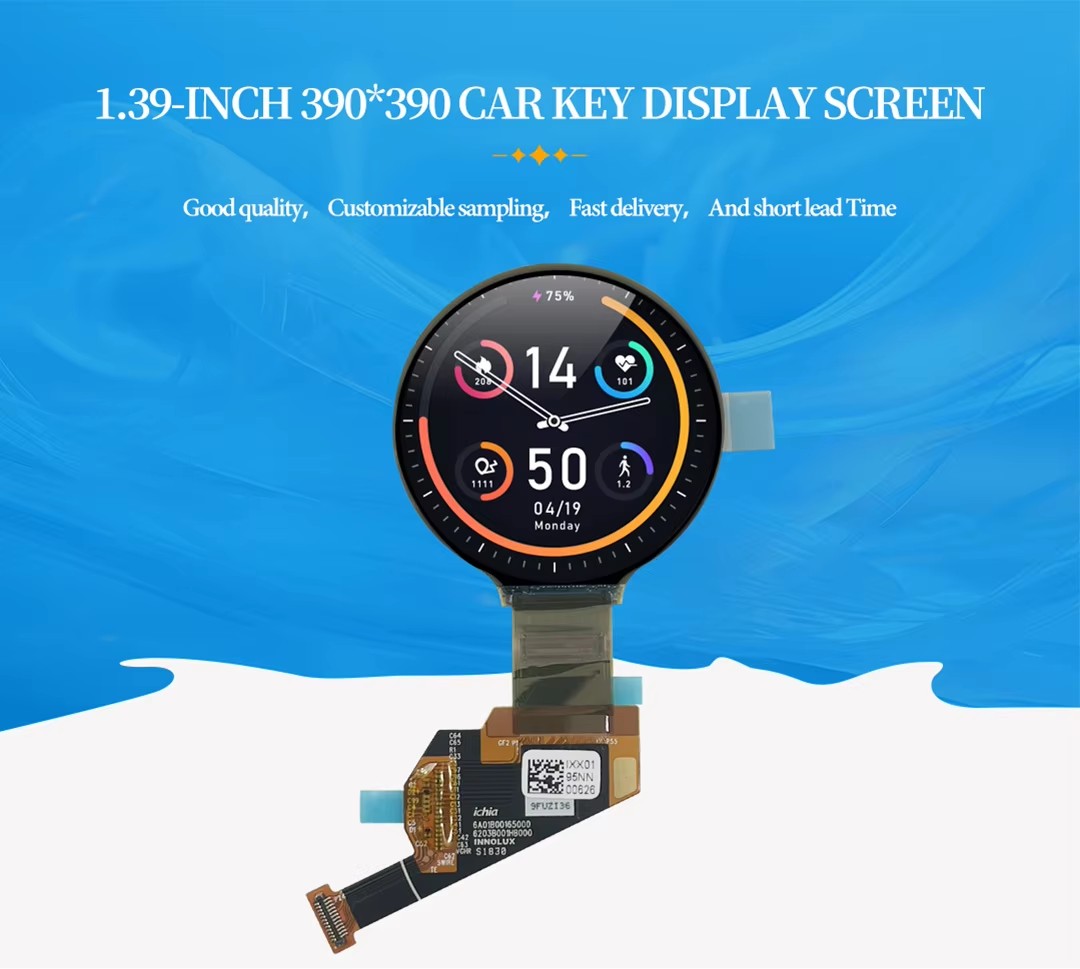
Integrating a flexible AMOLED display transforms next-generation smartwatch designs, slashes power consumption, and eliminates direct sunlight readability issues in wearable devices. Featuring a one point three nine inch circular footprint, four hundred by four hundred resolution, and RM67162 driver IC architecture, this module delivers crisp visual output. Sourcing this flexible circular panel offers exceptional commercial value, enabling wearable device OEMs, hardware startups, and industrial gauge makers to build premium smartwatches affordably today.
This advanced screen module satisfies strict hazardous substance restrictions (RoHS and CE safety compliance) while delivering an ultra-high ten thousand to one contrast ratio. Meanwhile, its flexible polyimide substrate bends effortlessly to conform inside curved smartwatch cases. As a result, product designers maximize wrist wear comfort while securing durable, budget-friendly display hardware today. Explore our complete product-category catalog to order circular AMOLED screens online now.
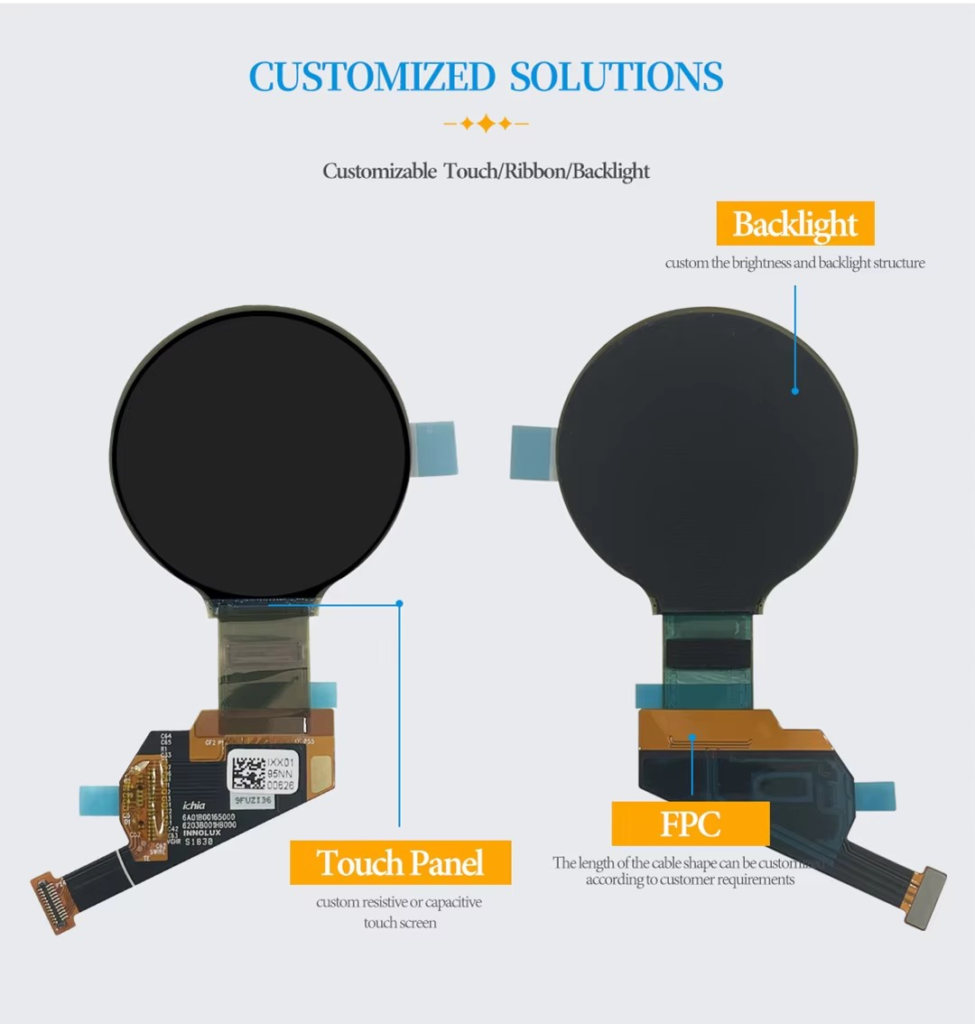
4 Display Bottlenecks Impairing Modern Wearable User Experience
Smartwatch engineers, fitness tracker makers, and medical wearable designers constantly battle washed-out screen colors, heavy battery drain, and thick glass panels. Traditional liquid crystal displays lack deep contrast, causing grainy text and blurry fitness curves under outdoor sunlight conditions. Embedded hardware engineering teams regularly identify four primary display failure points across conventional wearable device designs.
Backlight Light Leakage Causing Greyish Blacks and Poor Outdoor Visibility
Standard small liquid crystal screens rely on continuous LED backlights that bleed light through dark watch face interfaces continuously. Constant backlight leakage creates dull greyish blacks, obscuring intricate health tracking curves and fine text in direct sunlight. Consequently, smartwatch users struggle to read vital health telemetry data clearly during outdoor fitness activities. Self-emissive organic diode pixels turn off completely, delivering deep pure blacks and ten thousand to one contrast ratios.
Rigid Glass Substrates Restricting Curved Wearable Industrial Design
Conventional glass display modules feature rigid flat profiles that force smartwatch enclosures to remain thick, heavy, and boxy. Rigid display edges prevent hardware designers from creating ergonomic, curved watch cases that contour comfortably around human wrists. Therefore, wearable brands fail to deliver sleek, fashionable aesthetic designs that appeal to style-conscious daily consumers. Flexible polyimide substrate materials allow screens to bend slightly, fitting smoothly inside irregular curved watch bodies.
Continuous Backlight Power Draw Depleting Small Wearable Batteries
Illuminating an entire LED backlight array drains tiny wearable batteries rapidly, forcing users to recharge smartwatches daily. High static power consumption limits always-on display functionality, turning smart watch faces dark during idle periods. Thus, device manufacturers face constant customer dissatisfaction regarding short standby times and frequent battery charging routines. Self-illuminating organic pixels consume minimal static energy, extending battery life significantly on small lithium cells.
Slow Liquid Crystal Response Speeds Inducing Graphic Motion Blur
Sluggish liquid crystal pixel response times generate visible motion blur during dynamic UI animation switching and watch face scrolling. Slow visual rendering creates distracting UI lag, degrading the premium touch response feel of high-end smartwatches. As a result, consumers perceive wearable operating systems as unrefined, cheap, and slow during daily navigation. Microsecond-level organic diode response speeds eliminate motion blur completely, ensuring buttery smooth dynamic watch face transitions.
Technical Solutions: 1.39 Inch Round OLED Display Module
The 1.39 Inch Round OLED Display Module combines four hundred by four hundred resolution, RM67162 driver control, and flexible polyimide substrate technology.
High-Resolution Circular Architecture with 287 PPI Density
Engineered with a four hundred by four hundred square pixel arrangement, this panel achieves two hundred eighty-seven pixels per inch density. The fine pixel density renders crisp watch face icons, sharp text fonts, and intricate health data curves without aliasing. Furthermore, check out our detailed technical-guide regarding MIPI signal timing, driver IC initialization, and flexible substrate assembly techniques.
Native Wide Color Gamut and Independent Self-Emissive Pixels
Utilizing self-emissive organic light-emitting diode technology, each pixel illuminates independently to deliver three hundred candela per square meter brightness. Native wide color gamut coverage reproduces vibrant gradient watch faces, rich color saturation, and three-dimensional interface layers seamlessly. Consequently, wearable displays remain perfectly legible across bright outdoor sunlight and low-light indoor environments without color deviation.
Ultra-Thin Flexible Substrate with Wide Thermal Tolerance
Constructed on a flexible polyimide material substrate, this ultra-thin module conforms to curved watch cases and irregular bodies easily. The robust module operates reliably in ambient temperatures ranging from minus twenty to plus sixty degrees Celsius continuously. Additionally, flexible two-piece sample minimum order quantities allow hardware engineering teams to prototype custom wearable terminals cost-effectively.
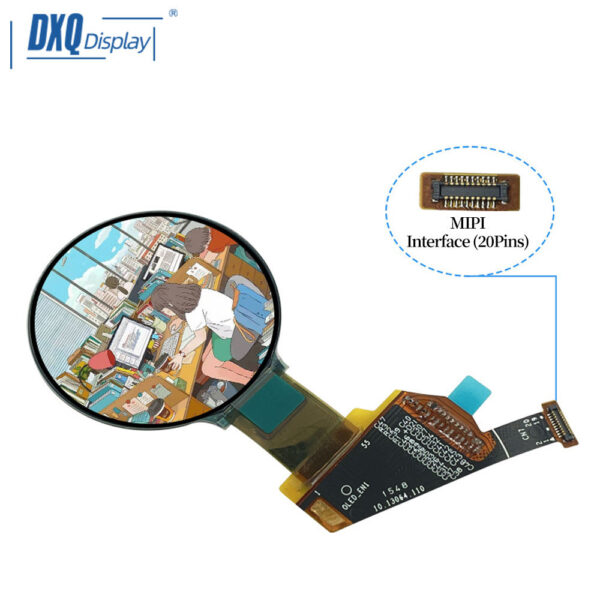
Technical Specifications & Wearable Display Comparison
The chart below compares our 1.39 Inch Round AMOLED Display against basic wearable TFT-LCD panels and passive monochrome screens.
| Specification Parameter | 1.39 Inch Round AMOLED Module | Standard Wearable TFT-LCD | Passive Monochrome Screen |
| Display Technology | Flexible AMOLED Self-Emissive | Transmissive TFT-LCD | Passive Monochrome Matrix |
| Pixel Resolution | Four Hundred by Four Hundred | Two Hundred Forty by Two Forty | Low Resolution Segment |
| Contrast Ratio Rating | 10000 to 1 Ultra-High | 500 to 1 Standard Ratio | 50 to 1 Basic Contrast |
| Substrate Flexibility | Flexible Polyimide Material | Rigid Glass Substrate | Rigid Glass Substrate |
| Interface Connection | 24-Pin MIPI Interface | SPI or MCU Interface | Basic Parallel Bus |
| Static Power Usage | Extremely Low (Black Pixels Off) | High Continuous Backlight | Low Static Power |
| Response Speed Rate | Microsecond Level Instant | Millisecond Level Lag | Slow Segment Switch |
| Cost Performance | High Value (Premium Texture) | Low Value (Washed-Out Look) | Low Value (Outdated Visuals) |
Versatile Deployments Across Wearable Hardware Scenarios
Consider these primary commercial deployment scenarios when integrating circular AMOLED display modules into your wearable hardware lineup today.
- Premium Smartwatches: High resolution and deep contrast create luxurious digital watch face displays matching high-end traditional timepieces.
- Fitness Tracking Bracelets: Lightweight flexible construction allows slim fitness band designs that monitor health metrics comfortably during workouts.
- Industrial Circular Gauges: Wide operating temperature tolerances enable rugged mini digital display gauges for compact industrial field instruments.
- Medical Health Monitors: Crisp two hundred eighty-seven PPI pixel rendering displays complex continuous heart rate curves and blood oxygen data clearly.
Upgrade your wearable display visual quality and achieve the ultimate hardware investment value today! Browse our wide product-category selection to order your circular AMOLED modules now.




Add comment