
Choosing an AMOLED Display Wholesale supplier requires more than comparing unit prices. For B2B buyers, technical compatibility, product quality, and supply consistency directly influence procurement decisions. Therefore, buyers should evaluate specifications alongside engineering support and customization capabilities.
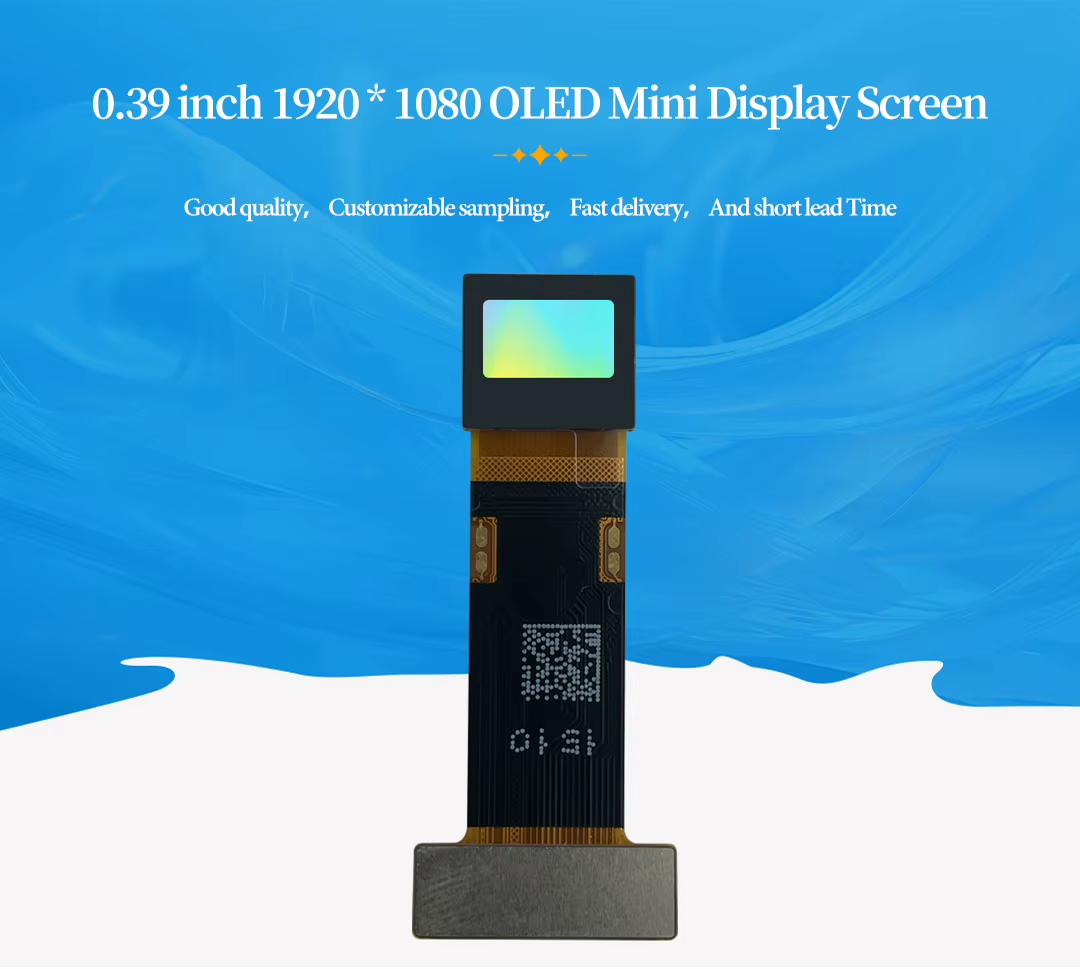
The B039FH8A0 AMOLED display module combines a compact design with Full HD resolution. It suits near-eye display projects, handheld gaming devices, camera equipment, and imaging applications. Moreover, its silicon backplane integrates pixel circuits and the driving IC. This architecture supports compact system designs and helps engineers evaluate integration requirements early.
How Can Buyers Ensure Consistent AMOLED Display Quality?
Product consistency matters when businesses purchase displays for repeated production runs. However, checking one sample alone cannot establish long-term supply reliability. Buyers should also examine inspection procedures, traceability, and quality documentation.
What quality checks should an AMOLED display supplier provide?
First, request a complete datasheet and confirm critical parameters. Next, evaluate representative samples under your intended operating conditions. Then, establish incoming inspection criteria before approving mass production.
For the B039FH8A0, buyers should verify resolution, brightness, connector configuration, and operating temperature. They should also confirm acceptable tolerances and inspection methods with the supplier.
In addition, request applicable quality records and material declarations. Where required, verify RoHS compliance and other market-specific documentation. These checks help procurement teams assess product suitability without relying solely on sales descriptions.
Will a Wholesale AMOLED Display Fit Your Existing Hardware?
Compact displays require precise mechanical and electrical integration. Therefore, engineers must review both dimensions and interface requirements before ordering.
How can buyers verify interface compatibility?
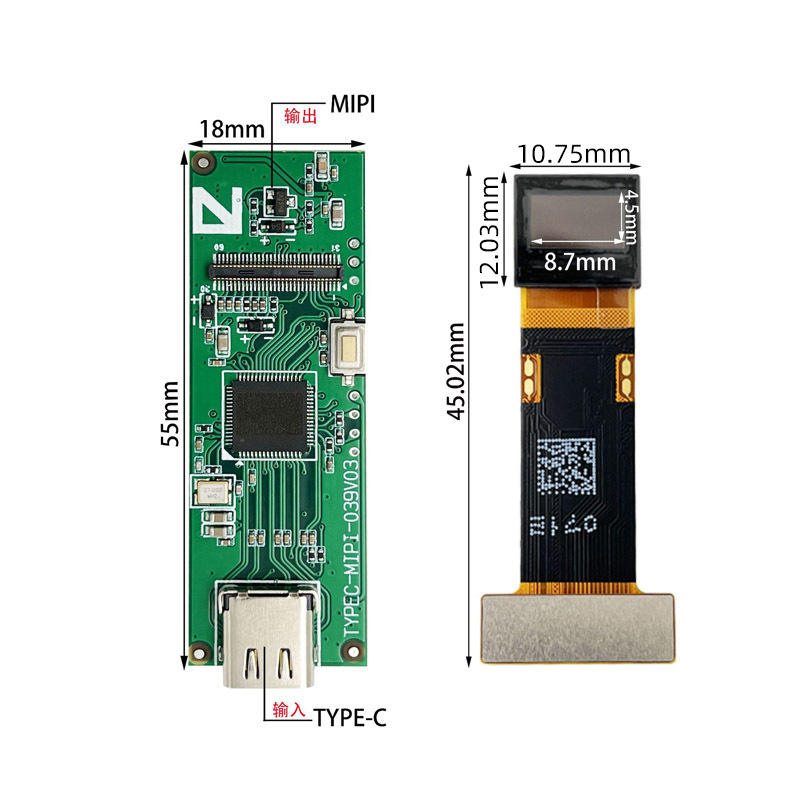
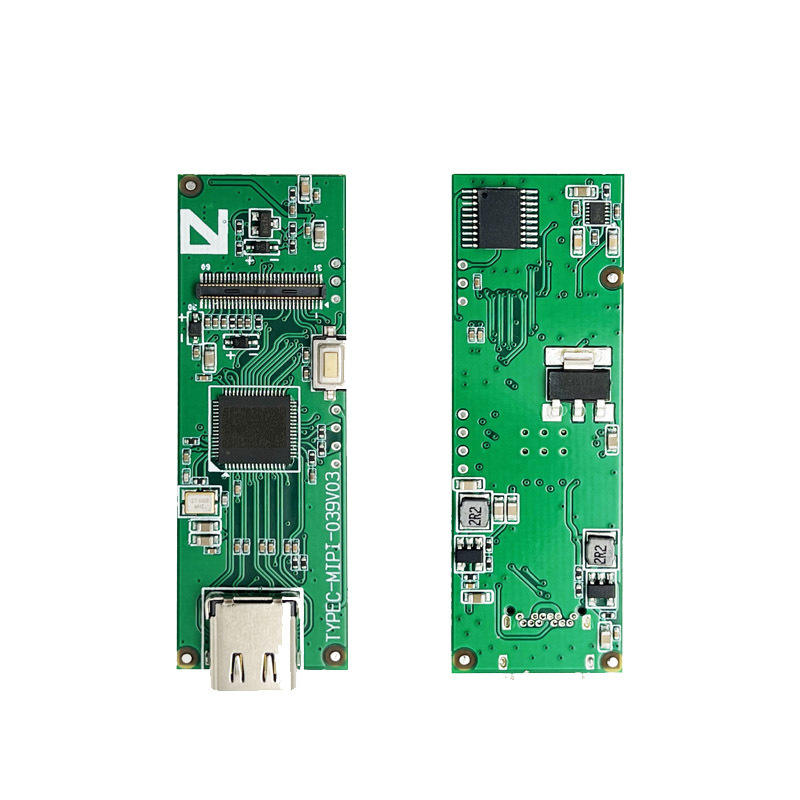
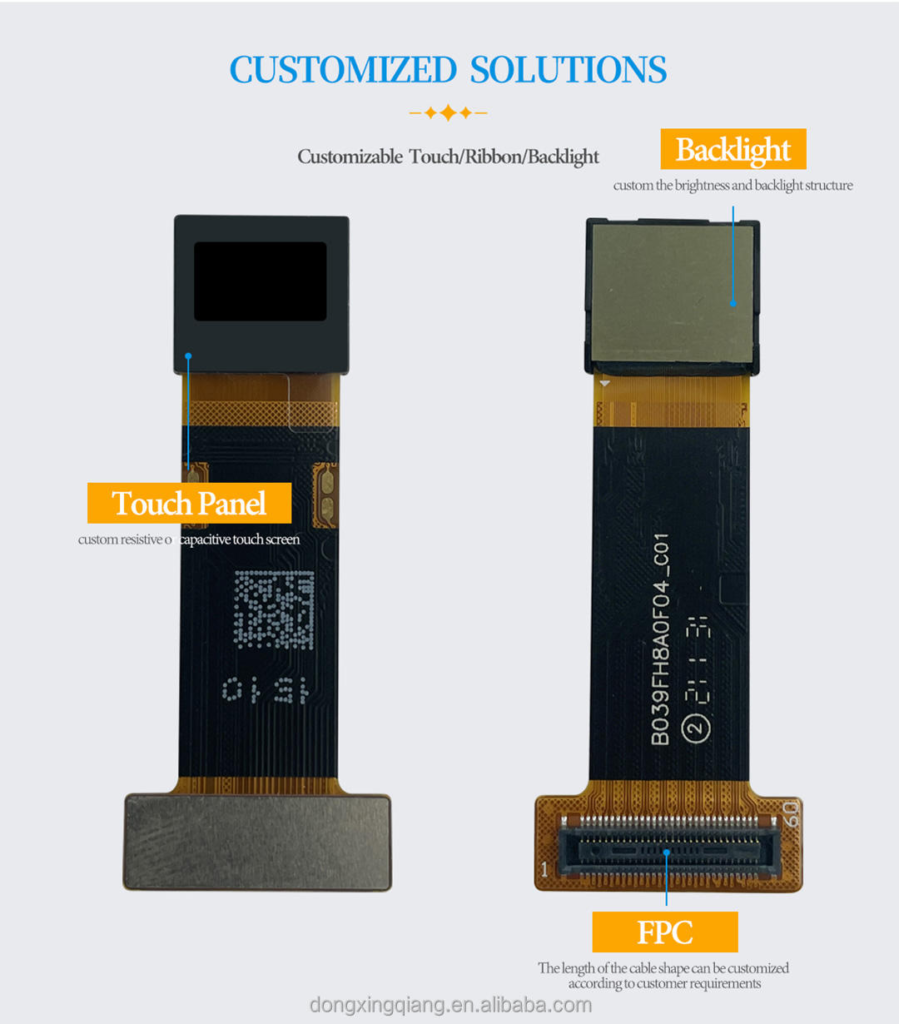
The B039FH8A0 features a sixty-pin connector and a compact outline. Its interface supports MIPI, with an optional configuration combining MIPI data and I2C commands. However, buyers should confirm the exact ordered configuration before hardware development.
MIPI DSI defines a high-speed serial interface between host processors and display modules.
MIPI Nevertheless, the host controller, electrical configuration, driver IC, and connector pinout must all match.
For procurement teams, the following specifications provide a useful starting point.
| Parameter | B039FH8A0 specification |
|---|---|
| Display type | Active-matrix color AMOLED |
| Diagonal size | 0.39 inches |
| Resolution | 1920 by 1080 pixels |
| Brightness | 500 candelas per square metre |
| Contrast ratio | 1000:1, according to the feature list |
| Driver IC | GC9107 |
| Interface | MIPI; optional MIPI data plus I2C commands |
| Connector | Sixty pins |
| Outline dimensions | 17 millimetres by 16.6 millimetres by 1.35 millimetres |
| Active area | 8.7495 millimetres by 4.9689 millimetres |
| Operating temperature | Minus 20 to plus 70 degrees Celsius |
| Storage temperature | Minus 30 to plus 80 degrees Celsius |
| Minimum order quantity | Two pieces |
| Sample lead time | Seven days |
| Mass production lead time | 25 to 30 days |
Note: The supplied description contains an inconsistent contrast-ratio entry. Confirm the final datasheet before design approval.
Explore AMOLED display modules for available product configurations and sourcing options.
Is a 0.39-Inch Full HD AMOLED Display Right for Your Application?
Resolution alone cannot determine whether a display suits a particular device. Instead, buyers should evaluate brightness, viewing conditions, optical design, and available installation space.
How do brightness and resolution support practical use?
The B039FH8A0 delivers 1920 by 1080 pixels within a 0.39-inch diagonal format. Consequently, it offers a compact display option for applications with demanding space constraints.
Its specified brightness reaches 500 candelas per square metre. This value provides an important reference for evaluating illumination requirements. However, final usability depends on optical efficiency, ambient light, and the complete device design.
For near-eye systems, engineers should also validate lens compatibility, focus, image alignment, and thermal behaviour. Similarly, camera and imaging equipment may require application-specific testing for colour reproduction and image quality.
Therefore, request samples before finalizing the optical architecture. This step helps teams evaluate actual performance instead of relying entirely on headline specifications.
How Can B2B Buyers Control AMOLED Display Wholesale Costs?
A competitive quotation should account for more than the initial unit price. Instead, buyers should evaluate sampling costs, order quantities, production schedules, and future availability together.
Which purchasing terms deserve attention?
The B039FH8A0 lists a minimum order quantity of two pieces. Consequently, businesses can begin with a small sample order before committing to larger volumes.
The listed sample lead time is seven days. Meanwhile, mass production typically requires 25 to 30 days, according to the supplied product information. Buyers should confirm these schedules when requesting quotations.
Furthermore, ask about price breaks, forecast planning, packaging requirements, and customization options. For recurring projects, clarify how the supplier manages specification changes and production-lot consistency.
The product also features an exclusive private-mold design. This detail may support differentiated product planning, subject to the supplier’s confirmed customization terms. As a result, procurement teams should discuss design ownership, available modifications, and commercial conditions directly.
Review the display integration technical guide before finalizing electrical, mechanical, and optical requirements.
What Should Buyers Verify Before Placing a Wholesale Order?
A structured supplier review helps reduce uncertainty during product qualification. First, compare the datasheet against the target device requirements. Next, check sample results, documentation, and delivery commitments.
| Evaluation item | What buyers should confirm |
|---|---|
| Technical documentation | Final datasheet and confirmed contrast ratio |
| Interface integration | Pinout, command configuration, and host compatibility |
| Quality control | Inspection criteria and batch traceability |
| Compliance | Applicable declarations and test reports |
| Commercial terms | Minimum order quantity, quotation validity, and lead time |
No certification should be assumed without supporting documentation. Therefore, request relevant evidence for your target market before approving production.
For additional customization, discuss interface configuration, engineering support, and long-term supply expectations. These details help buyers assess overall value rather than focusing exclusively on unit price.
Q&A: AMOLED Display Wholesale Supplier Selection
Q: Is the B039FH8A0 suitable for every AR design?
A: Not automatically. Confirm the optical stack, interface, and enclosure before validation.
Q: Can buyers order a small sample quantity?
A: Yes, the listed minimum order quantity is two pieces.
Q: How long does sampling take?
A: The stated sample lead time is seven days, subject to confirmation.
Q: How can businesses verify quality and compliance?
A: Request the final datasheet, inspection records, and applicable compliance documents before placing a volume order.




Add comment