
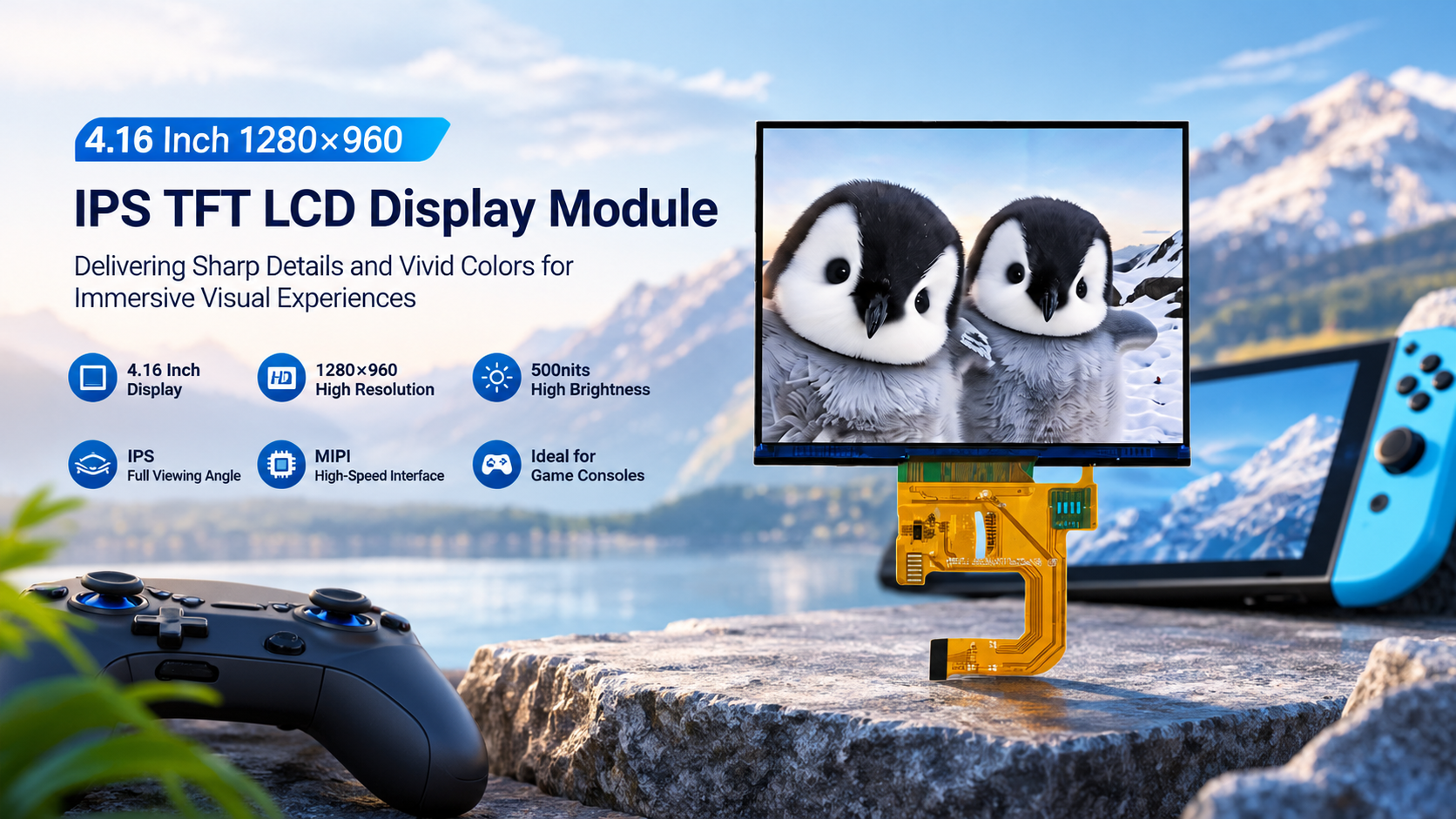
A quality TFT LCD display helps gaming devices deliver clearer graphics and more engaging visual experiences. However, handheld consoles need more than sharp images. They also require good viewing angles, suitable brightness, and reliable interface integration.
DXQ offers a 4.16-inch IPS TFT LCD display module for gaming consoles and embedded devices. It combines 1280 × 960 pixel resolution with 500 candela per square meter brightness. Moreover, its MIPI interface supports integration with compatible host systems. These features help device manufacturers create compact displays with detailed visuals and flexible customization options.
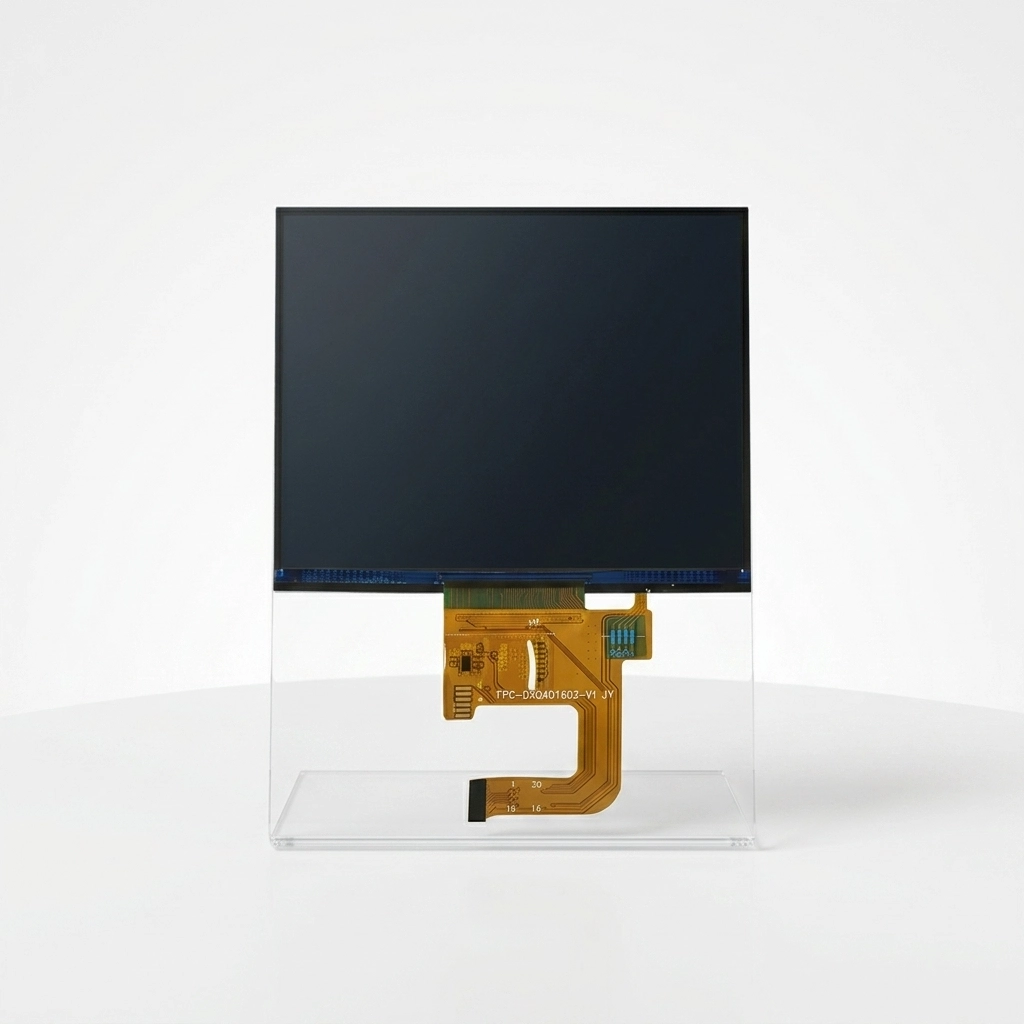
Can a High-Resolution TFT LCD Display Reveal More Game Details?
Small gaming screens must present characters, text, and interface elements within limited space. Therefore, resolution plays an important role in visual clarity. The DXQ module provides 1280 × 960 pixels across a 4.16-inch display.
This resolution produces a four-to-three aspect ratio. Consequently, designers can accommodate suitable game interfaces and retro gaming content. Meanwhile, the high pixel count supports detailed graphics and readable interface elements.
How Does IPS Technology Improve Viewing?
The IPS panel supports wide viewing angles and consistent image presentation. This helps users view gaming content from different handheld positions. Additionally, the display supports 16.2 million colors and 70% NTSC color gamut coverage.
These characteristics suit colorful games, menus, and multimedia interfaces. However, the final visual result also depends on the graphics source and display calibration. Therefore, manufacturers should evaluate the panel within their actual device configuration.
Is 500 Candela per Square Meter Enough for Gaming?
Ambient lighting can affect handheld gaming visibility. For example, indoor lighting and outdoor daylight create different viewing conditions. Therefore, suitable display brightness matters when designing portable gaming devices.
The DXQ TFT LCD display delivers typical brightness of 500 candela per square meter. This level supports clear viewing across many indoor environments. Additionally, it can help improve visibility in brighter surroundings when screen reflections remain controlled.
How Can Brightness Support Practical Gaming Use?
Brightness should work alongside contrast, backlight design, and power management. DXQ offers customizable backlight options for different device requirements. Consequently, manufacturers can discuss suitable configurations during product development.
A balanced display design also considers battery consumption and thermal conditions. Therefore, selecting brightness settings involves both visual performance and overall device requirements.

Can MIPI Connectivity Simplify Gaming Device Integration?
Gaming devices require communication between the display and their main processing systems. Consequently, interface compatibility matters during hardware development. The DXQ module uses a MIPI communication interface.
MIPI supports display integration in compatible embedded platforms. Moreover, its interface architecture suits compact electronic products. However, manufacturers should verify host-controller compatibility, signal configuration, and driver support before integration.
Which Technical Details Help Reduce Development Work?
The module uses the GH7005-01 driver IC. This provides an important reference for hardware and driver evaluation. Meanwhile, the configurable backlight and optional touch panel allow additional design flexibility.
These options support different handheld console concepts. For example, a gaming device may prioritize physical controls. Alternatively, another product may incorporate touchscreen interaction. Therefore, DXQ’s customization options help accommodate different interface designs.
Explore DXQ TFT LCD display modules to discover display options for gaming and embedded applications.
Can One Display Module Support Different Embedded Products?
Gaming displays often share requirements with other compact electronic devices. For instance, drones need readable status interfaces. Similarly, smart-home products benefit from clear menus and practical screen integration.
The DXQ module supports an operating temperature range of -20 to +70 degrees Celsius. This range expands its potential use across suitable embedded applications. Nevertheless, complete device performance also depends on enclosure design and other electronic components.
Which Specifications Matter Most During Selection?
The following table summarizes the module’s principal characteristics. It also identifies details that manufacturers should confirm during integration.
| Parameter | DXQ Specification | Application Benefit |
|---|---|---|
| Display size | 4.16 inches (10.57 centimeters) | Compact device integration |
| Resolution | 1280 × 960 pixels | Detailed graphics and text |
| Display technology | IPS TFT LCD | Wide-angle viewing |
| Typical brightness | 500 candela per square meter | Improved visibility |
| Color support | 16.2 million colors | Rich interface presentation |
| Color gamut | 70% NTSC | Defined color reproduction capability |
| Communication interface | MIPI | Embedded system integration |
| Driver IC | GH7005-01 | Hardware design reference |
| Operating temperature | -20 to +70 degrees Celsius | Supports varied operating environments |
| Backlight | Customizable | Flexible power and brightness design |
| Touch panel | Customizable | Optional touchscreen integration |
| Certifications | Not specified | Confirm applicable compliance documents |
This specification combination supports compact gaming and embedded display projects. Additionally, customization allows manufacturers to align the module with specific product goals.
Read our TFT LCD technical guide for more information about display integration and module selection.
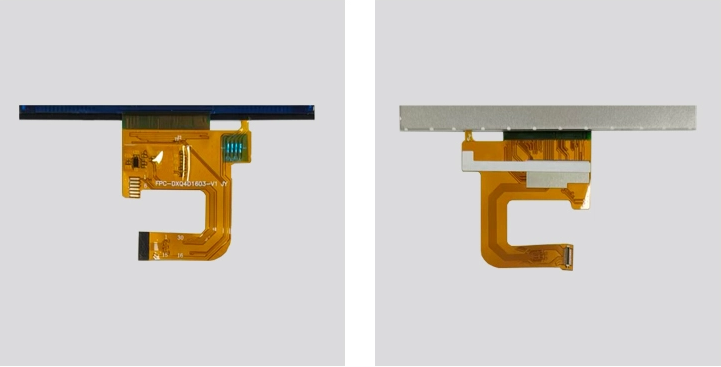
How Can DXQ Support Custom Gaming Display Projects?
Choosing a display is only one part of product development. Manufacturers must also coordinate dimensions, interface requirements, backlight configuration, and touch functionality.
DXQ supports customizable display solutions for gaming consoles and other embedded applications. Its 4.16-inch IPS module provides a defined starting point for compact display design. Furthermore, optional touch and backlight configurations help accommodate different product concepts.
By confirming technical requirements early, engineering teams can evaluate integration more efficiently. They can also assess visual performance within the final enclosure. Consequently, a suitable TFT LCD display becomes an integral part of the overall gaming experience.
Q&A
Q: What makes the DXQ TFT LCD display suitable for gaming devices?
Its 1280 × 960 resolution supports detailed visuals. Additionally, IPS technology and 500 candela per square meter brightness help deliver clear viewing.
Q: Can DXQ customize the display for handheld consoles?
Yes. The backlight and touch panel support customization. Buyers should provide their interface requirements and mechanical specifications.
Q: Does the module support outdoor gaming?
Its brightness and operating temperature range support various environments. Actual outdoor readability depends on sunlight, reflections, and the final device design.
Q: Which interface does this TFT LCD display use?
The module uses MIPI connectivity and the GH7005-01 driver IC. Confirm controller compatibility and driver requirements before development.
Q: What information should manufacturers provide when requesting a quotation?
Provide the target application, required display dimensions, interface details, and touch requirements. Also, specify brightness expectations and operating conditions. These details help DXQ assess a suitable customized display solution.



Add comment